

Free Alcohol Tracker App — Track Your Drinks and Weekly Alcohol Intake
How much alcohol did you actually drink this week? And could it already be affecting your health? A glass of wine with dinner, a beer on Friday, a couple of cocktails over the weekend — it’s easy to remember the occasions, but much harder to estimate how much alcohol you’ve actually consumed. The strength of your drinks, the amount you consume, and how often you drink all matter when it comes to understanding your alcohol intake and its potential health effects. An Alcohol Tracker can help you see the bigger picture.
Track What You Drink
Drinking isn’t always about strong spirits or heavy nights out. A glass of wine with dinner or a cocktail with friends can easily become part of your routine.
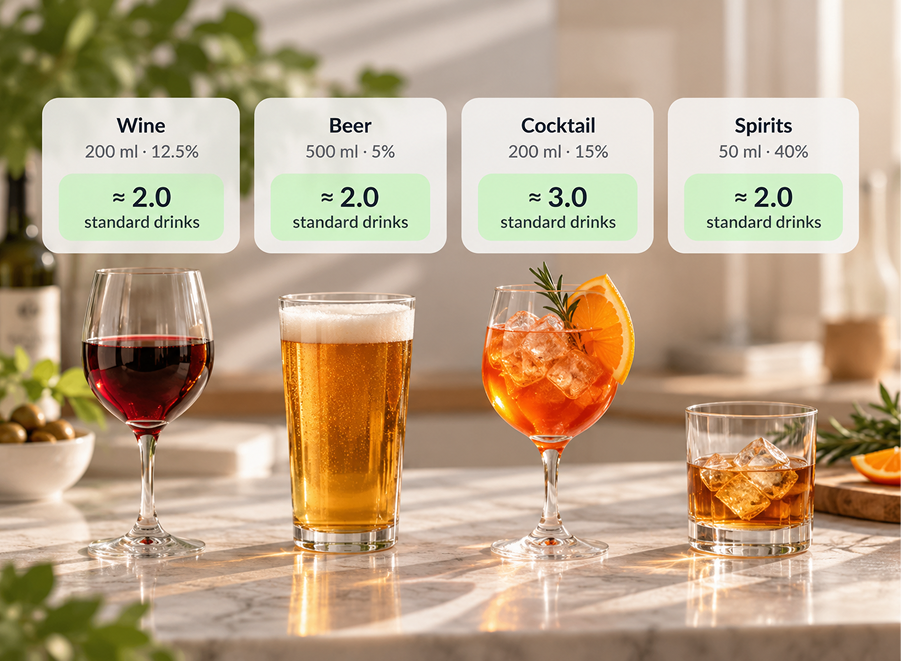
But a drink with a lower alcohol percentage doesn’t necessarily mean you’re consuming less alcohol. A larger serving of a weaker drink can contain more pure alcohol than a smaller serving of something stronger.
That’s where an alcohol tracker becomes useful. Instead of simply counting glasses, you can measure the actual amount of alcohol you consume, compare different drinks, and understand your drinking patterns over time.
Let’s start with the measurement that makes these comparisons possible: the standard drink.
Standard Drink Calculator
A standard drink is a unit used to measure the amount of pure alcohol (ethanol) in a beverage, regardless of whether you’re drinking wine, beer, or spirits. An alcohol tracker uses this measurement to help you compare different drinks and understand how much alcohol you’re actually consuming.
However, one standard drink doesn’t mean the same thing everywhere. Different countries use different definitions:
| Country or standard | Pure alcohol per standard drink |
|---|---|
| WHO AUDIT / Healsens | 10 grams |
| Netherlands, France and several other European countries | 10 grams |
| United Kingdom | 8 grams (1 UK unit) |
| United States | 14 grams |
There is no single internationally agreed definition of a standard drink. The World Health Organization’s Alcohol Use Disorders Identification Test (AUDIT) uses a 10-gram standard drink1, which is also a common reference in Europe.
Healsens uses this same 10-gram definition, making it consistent with the WHO AUDIT methodology and the standard drink measures used in countries such as the Netherlands and France.
This distinction matters when comparing alcohol consumption across countries. For example, 20 grams of pure alcohol equals two standard drinks in Healsens, 2.5 UK units, or approximately 1.4 US standard drinks.
The actual amount of alcohol consumed remains exactly the same — only the measurement unit changes. A larger standard drink does not mean that a country considers more alcohol safe to consume.
IN THIS ARTICLE
3
4
How to Start Tracking Your Alcohol Consumption
- 1. Track Your Drinks for Two Weeks
- 2. Find Out How Much Your Favorite Glass Holds
- 3. Review Your Weekly Alcohol Consumption Report
5
Why Is Tracking Alcohol Consumption Worth It?
- Understand How Alcohol Relates to Your Well-Being
- Discover When Lower-Alcohol Drinks Don’t Mean Less Alcohol
- Make More Conscious Decisions
RELATED ARTICLES
How Does Healsens Calculate Standard Drinks?
Healsens calculates the amount of pure alcohol using two details:
- Alcohol by volume (ABV %): The strength of your drink.
- Volume (ml): How much of the drink you consumed.
The calculator converts these values into grams of pure alcohol and divides the result by 10.
For example:
| Drink | Volume | ABV | Healsens standard drinks |
|---|---|---|---|
| Wine | 100 ml | 12.5% | ~1 |
| Wine | 200 ml | 12.5% | ~2 |
| Beer | 250 ml | 5% | ~1 |
| Beer | 500 ml | 5% | ~2 |
| Spirits | 32 ml | 40% | ~1 |
A 200 ml glass of wine at 12.5% ABV contains approximately 20 grams of pure alcohol — or two standard drinks in Healsens.
This is why recording the actual volume and strength of a drink gives you a more accurate picture of your alcohol intake than simply counting glasses.
» Wondering why you should calculate your biological age? These 5 reasons will convince you to do it now.
How Much Alcohol Is Too Much? Understanding Your Weekly Alcohol Consumption
The healthiest choice when it comes to alcohol is not drinking at all. According to the World Health Organization, no level of alcohol consumption is completely risk-free2.
But if you’re reading this article, you may not be planning to give up alcohol entirely. Perhaps you’d simply like to understand how much you drink, whether it could affect your health, and what changes might be worth considering.
That’s where an alcohol tracker becomes useful: it helps you measure your weekly intake in standard drinks and better understand your drinking habits over time.
What Does Research Say About Weekly Alcohol Intake?
A large study published in The Lancet, involving nearly 600,000 current drinkers across 83 prospective studies, examined the relationship between weekly alcohol consumption, cardiovascular disease, and mortality3.
The researchers found that among people who drank alcohol, the lowest observed risk of death was associated with consumption of approximately 100 grams of pure alcohol per week or less. In Healsens, this corresponds to 10 standard drinks per week.
Compared with people who consumed more than 0 but no more than 10 standard drinks per week, researchers estimated the following differences in life expectancy from age 40:
✦ 10–20 standard drinks per week — approximately 6 months shorter.
✦ 20–35 standard drinks per week — 1–2 years shorter.
✦ More than 35 standard drinks per week — 4–5 years shorter.
Importantly, this is not a recommended or safe drinking limit. Health risks can exist even at lower levels of consumption.
Another study, involving nearly 14,000 Finnish adults, examined how different levels of alcohol consumption were associated with liver enzyme abnormalities4.
Researchers categorized participants as light, moderate, or heavy drinkers, using different thresholds for men and women. Higher consumption was associated with a greater likelihood of elevated gamma-glutamyltransferase (GGT), a liver enzyme commonly measured in blood tests.
The findings also showed that age, excess body weight, smoking, and physical activity influenced the relationship between alcohol consumption and liver health.
Together, these studies highlight an important point: the total amount of alcohol you drink matters, but so do your drinking patterns and individual health factors.
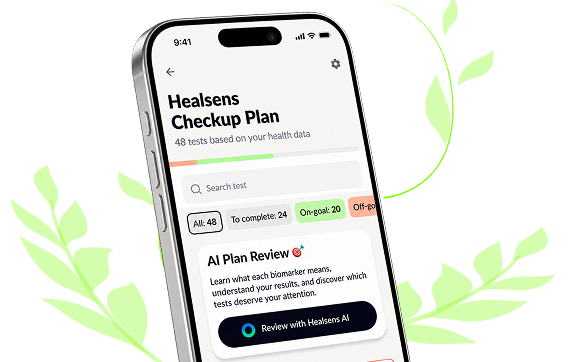
Want a more personal check-up?
Answer a few quick questions – family and personal health factors influence your well-being. We’ll use them to tailor your plan and recommendations.
How to Start Tracking Your Alcohol Consumption
Understanding your weekly alcohol intake doesn’t have to mean changing your habits overnight. Sometimes, the most useful first step is simply to observe them. Using an alcohol tracker for two weeks can help you establish a clearer picture of your usual drinking habits.
Here are three practical steps to get started.
1. Track Your Drinks for Two Weeks
For the first two weeks, try recording your usual alcohol consumption without deliberately changing your routine.
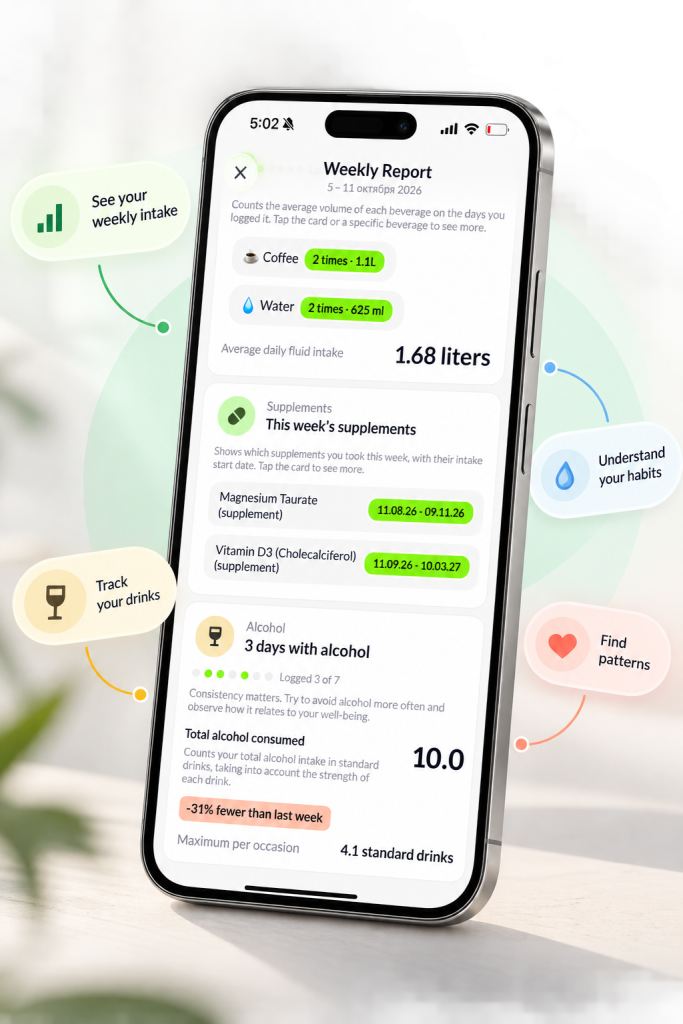
At the end of the evening, before going to bed, or the following morning, enter what you drank into Healsens. The Healsens alcohol tracker automatically converts your recorded drinks into standard servings for your weekly report.
The goal isn’t to judge yourself or immediately set limits. It’s to get a clearer picture of your current habits.
2. Find Out How Much Your Favorite Glass Holds
You don’t need special measuring equipment to track your drinks.
A measuring cup can be helpful, but if you usually drink wine from the same glass, you can measure its volume once and use that information for future entries.
For example, your usual serving might contain 200–250 ml of wine, depending on the glass and how full you pour it.
Let’s say you drink two glasses of wine, each containing 200 ml.
Instead of making two separate entries, you can record the total:
- Alcohol strength (ABV): 12.5%
- Volume consumed: 400 ml
- Healsens standard drinks: approximately 4
That’s almost 40 grams of pure alcohol in one evening.
Beer and other packaged drinks can be even easier to track, since both the alcohol percentage and volume are usually printed on the label.
3. Review Your Weekly Alcohol Consumption Report
Each alcohol entry contributes to your weekly consumption data in Healsens.
Your Weekly Health Report helps you understand:
- How many days you recorded drinking alcohol
- How many standard drinks you consumed in total
- Your highest recorded intake on a single occasion
- How your consumption compares with the previous week
After two weeks, you’ll have a clearer picture of your recorded drinking patterns.
You can also compare your weekly intake with the findings from the research discussed above. Remember, however, that these figures describe population-level associations, not a safe drinking limit for any individual.
Why Is Tracking Alcohol Consumption Worth It?
Keeping an alcohol journal can offer benefits beyond simply knowing how many drinks you’ve had. An alcohol tracker can help you notice patterns that are easy to overlook when relying on memory alone.
Understand How Alcohol Relates to Your Well-Being
Have you ever woken up feeling unusually tired after an evening when you didn’t think you drank very much?
Try recording your alcohol consumption alongside your morning mood, energy, or symptoms.
Over time, you may notice patterns worth paying attention to.
For example, you might find that mornings after higher alcohol consumption are often associated with lower energy or poorer sleep.
These observations cannot establish that alcohol caused a particular symptom, and feeling fine the next morning doesn’t mean your alcohol intake was risk-free. But they can help you better understand your habits and well-being.
Discover When Lower-Alcohol Drinks Don’t Mean Less Alcohol
Switching from spirits to wine or beer may feel like reducing alcohol consumption.
But the actual amount of pure alcohol depends on both strength and volume.
A larger quantity of a lower-alcohol drink can contain more ethanol than a smaller quantity of a stronger drink.
An Alcohol Tracker helps make that difference visible.
Make More Conscious Decisions
One of the potential benefits of tracking is greater awareness.
When you can see how much alcohol you’ve already consumed during the week, you have more information to guide your next decision.
For some people, this awareness may encourage them to drink less, choose a smaller serving, or skip a drink.
Rather than relying on memory or vague impressions, you’re making decisions with a clearer understanding of your habits.
Follow us on Facebook|| Instagram || Telegram || Youtube
When Tracking Reveals Something You’d Rather Not See
There’s also a less comfortable side to using an alcohol tracker: sometimes the numbers reveal that you’re drinking more than you expected.
Perhaps the occasional glass of wine turns out to be a regular habit. Perhaps switching to lighter drinks hasn’t reduced your overall alcohol intake. Or perhaps your health checkup reveals changes in biomarkers that deserve further attention.
These discoveries can feel uncomfortable, especially when you’ve always considered your drinking habits relatively moderate. But awareness isn’t about judging yourself. It’s about giving yourself the opportunity to make informed choices.
You don’t have to change everything at once. And you don’t have to interpret every result on your own.
The purpose of tracking isn’t to create another reason to worry. It’s to replace uncertainty with a clearer picture of your habits.
Take the Next Step with Personalized Preventive Health
Alcohol consumption is just one factor that can influence your health. Age, sex, family history, medical conditions, and other lifestyle factors also matter. If you’d like to take a broader look at your health, Healsens can help you build a personalized preventive screening plan. The Healsens alcohol tracker is part of a broader approach to preventive health and lifestyle monitoring.
Healsens considers your health profile, including your reported alcohol consumption, to help identify relevant health screenings and biomarkers to monitor.
Depending on your individual circumstances, these may include indicators related to liver function, metabolic health, or cardiovascular risk.
A blood test cannot tell you exactly how much alcohol is safe for you, and an abnormal biomarker does not necessarily mean alcohol is responsible. But laboratory results, combined with your health history and lifestyle information, can provide valuable context for preventive care.
Start with awareness. Understand your habits. Make choices that support your long-term well-being.
*If you drink heavily or regularly and may be physically dependent on alcohol, seek medical advice before stopping abruptly. Alcohol withdrawal can sometimes be dangerous.
Frequently Asked Questions About Alcohol Tracking
How does an alcohol tracker calculate standard drinks?
An alcohol tracker uses the volume and alcohol percentage (ABV) of a drink to estimate how much pure alcohol it contains. Healsens converts this amount into standard drinks of 10 grams each.
Can I track my weekly alcohol consumption for free?
Yes. The Healsens alcohol tracker lets you record your drinks and review your weekly alcohol consumption, including total standard drinks and changes compared with the previous week.
Why should I track alcohol consumption if I don’t plan to quit drinking?
Tracking can help you understand your actual intake, notice drinking patterns, and make more informed decisions about your well-being — even if you’re not currently planning to stop drinking.
FURTHER READING
Source: ©️2019 Healsens B.V. All right reserved
- WHO TECHNICAL MANUAL ON ALCOHOL TAX POLICY AND ADMINISTRATION
- No level of alcohol consumption is safe for our health
- Risk thresholds for alcohol consumption: combined analysis of individual-participant data for 599 912 current drinkers in 83 prospective studies
- Where should the safe limits of alcohol consumption stand in light of liver enzyme abnormalities in alcohol consumers?